
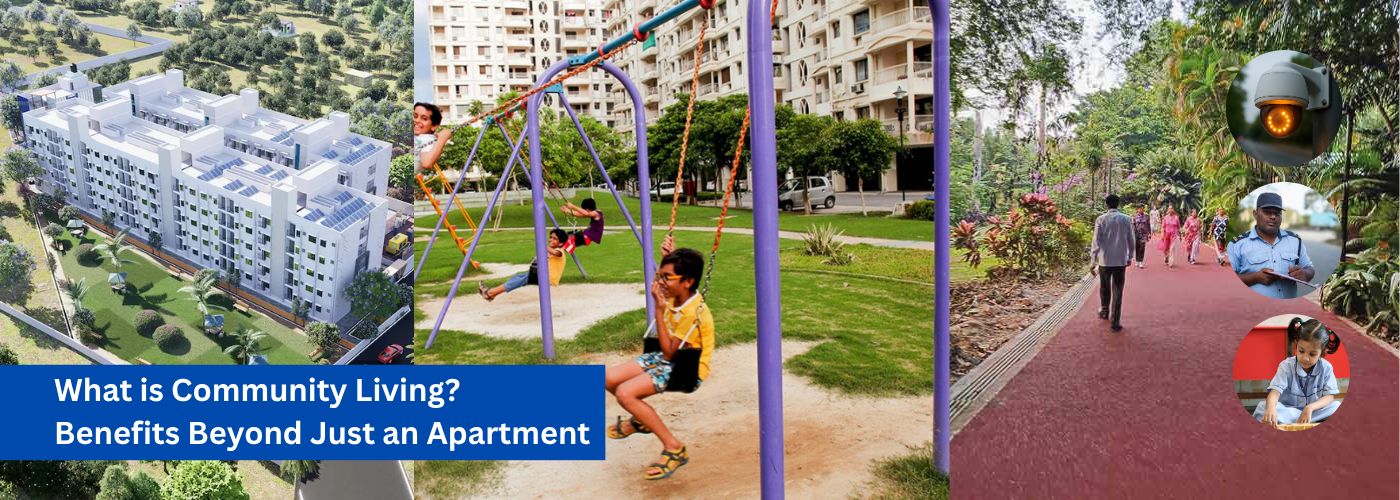
In today’s fast-paced world, the concept of home has evolved beyond four walls and a roof. Community living represents a modern approach to residential life that combines comfortable housing with shared amenities, security, and a sense of belonging. But what exactly is community living, and why are families increasingly choosing this lifestyle over traditional apartments?
Understanding Community Living
Community living is a residential model where multiple families share a gated complex with common amenities, security features, and recreational spaces. Unlike standalone apartments, community living projects are designed to foster social connections while providing residents with modern facilities that enhance their quality of life.
Think of it as creating a neighbourhood within a neighbourhood—where children play together safely, families connect over shared interests, and everyone benefits from professionally managed amenities and round-the-clock security.
The Family Benefits: More Than Just Square Footage
- Enhanced Safety and Security
For families, safety is paramount. Community living projects typically feature:
- 24×7 security personnel
- CCTV surveillance throughout the premises
- Gated entry and exit points with access control
- Well-lit common areas and pathways
This comprehensive security infrastructure means parents can have peace of mind knowing their children are playing in a protected environment, and elderly family members can move around safely.
- Ready-Made Social Networks
One of the most underrated benefits of community living is the instant social ecosystem it creates. Families moving to new cities or areas often struggle with isolation. In a community living setup, neighbours become friends, and children naturally form playgroups. This is especially valuable for:
- Working parents who want their children to have playmates nearby
- Homemakers seeking social connections with other residents
- Elderly family members who benefit from companionship
- Convenience and Time Savings
Modern community living projects are strategically located near essential services. Proximity to educational institutions, hospitals, public transport, and highways means less time commuting and more time with family. For busy parents juggling work and childcare, this convenience is invaluable.
Why Community Living is a Game-Changer for Children
- Safe Outdoor Play Spaces
In an era where children spend increasing time indoors with screens, community living provides dedicated play areas where kids can run, climb, and explore safely.
- Social Skills Development
Children growing up in community living environments naturally develop better social skills. Daily interactions with peers help them learn Cooperation and sharing, Empathy and understanding of diverse families and Leadership and teamwork
- Sense of Belonging
Children who grow up in tight-knit communities develop a stronger sense of belonging and security. They have friends just an elevator ride away, celebrate festivals together, and create childhood memories within a supportive environment.
- Educational Advantages
Community living projects often attract families with similar values around education. This creates an environment where, Children can form study groups, Parents can share educational resources and tips and Peer learning becomes natural.
The Connectivity Advantage
Modern community living isn’t about isolation—it’s about strategic connectivity. The best projects balance peaceful residential life with easy access to:
- Educational Institutions: Reducing daily commute stress for children and parents
- Healthcare Facilities: Ensuring quick access during emergencies
- Public Transport: Connecting to buses, trains, and metro stations
- Major Highways: Facilitating travel to major cities and business hubs
- Commercial Areas: Providing access to shopping, entertainment, and employment
This connectivity doesn’t just save time—it dramatically improves quality of life and makes the property more valuable.
The Growing Trend: Community Living Beyond Metro Cities
While community living has been established in major metros, it’s now transforming tier-2 and tier-3 cities. These emerging community living projects offer:
- Affordability: Lower price points than metro alternatives
- Modern Amenities: Metro-standard facilities at reasonable costs
- Growing Infrastructure: Cities developing rapidly with improved connectivity
- Lower Population Density: More space and less congestion
- Local Economic Growth: Job creation and business opportunities
Take Ambur, for example—a town strategically located on the Chennai-Bangalore corridor. Farida Royale has pioneered the community living concept here, backed by the Tamil Nadu Shelter Fund (TNSF), the flagship real estate fund of Tamil Nadu Infrastructure Fund. As the first community living project in Ambur, Farida Royale exemplifies how this residential model can transform smaller cities.
Offering configurations from 1 RK to combined 2 BHK apartments, Farida Royale provides families with options that match their needs and budgets. With 24×7 security, CCTV cameras, a gated community, and a dedicated children’s play area, it delivers on the core promises of community living. Its location—close to educational institutions, hospitals, bus and train stations, and the Chennai-Bangalore Highway—demonstrates the connectivity advantage that makes such projects attractive for modern families.
Making the Right Choice: Is Community Living for You?
Community living is ideal if you:
- Have a young family and prioritize safety and child-friendly environments
- Value social connections and community engagement
- Want professional management of your residential complex
- Seek convenience through proximity to essential services
- View your home as both a living space and a long-term investment
- Appreciate the balance between privacy and community
The Bottom Line
Community living represents more than just purchasing an apartment—it’s an investment in a lifestyle that prioritizes safety, convenience, social connections, and quality of life. For families with children, the benefits are particularly compelling, offering a nurturing environment where kids can thrive physically, socially, and emotionally.
As urban planning evolves and more professionally managed community living projects emerge across India, families have unprecedented opportunities to choose homes that truly serve their needs. Whether in bustling metros or growing tier-2 cities, the community living model is redefining what it means to come home.
The question isn’t whether community living offers benefits beyond just an apartment—it clearly does. The real question is whether you’re ready to experience the difference for yourself and your family.